































Motherhood is a hormonal yo-yo and for some mothers a time when psychological or social support can be crucial.
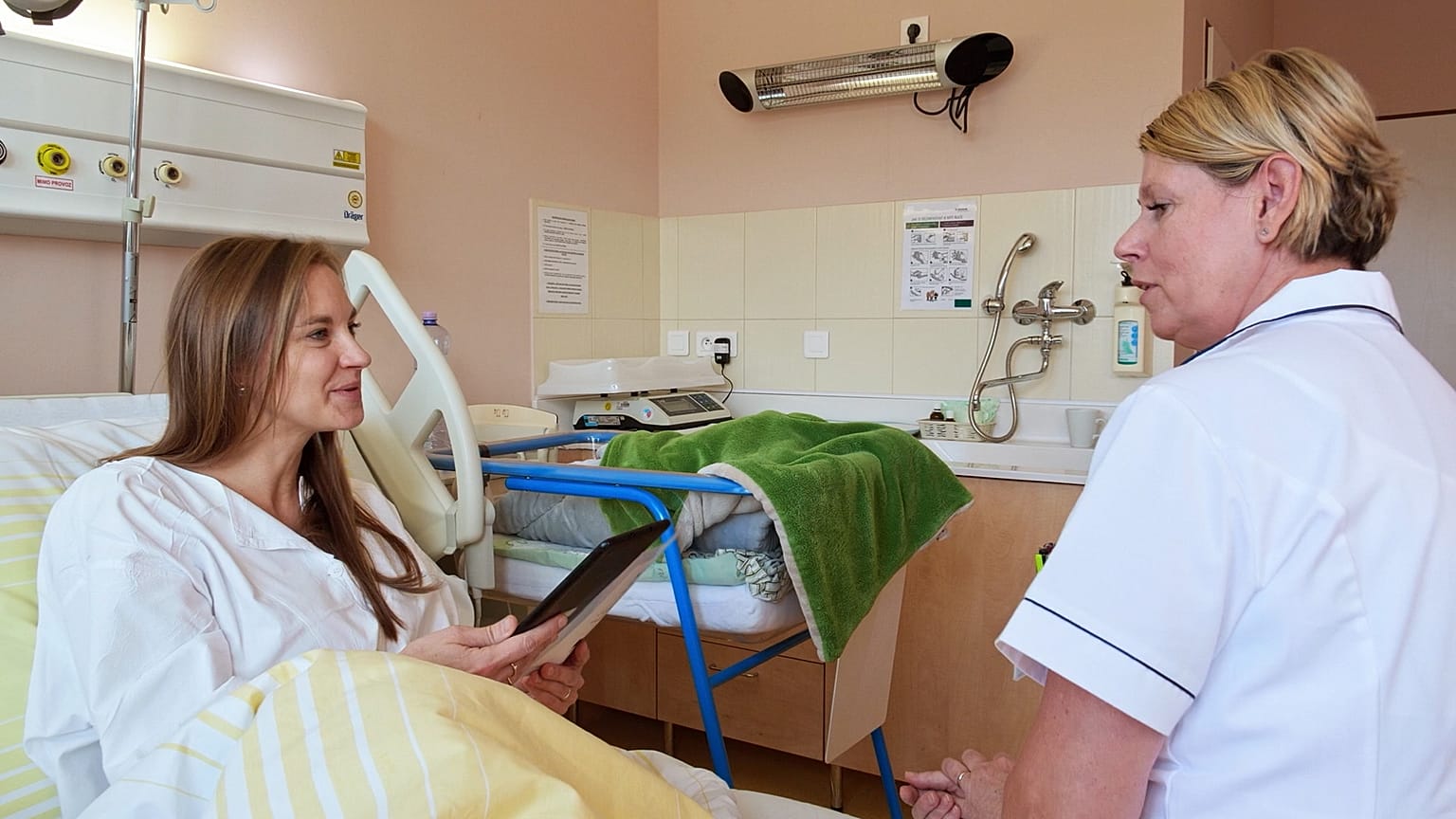
In the Czech Republic, 98% of women give birth in hospitals. That is why this screening of their needs is carried out there. The Early Help for Families with Psychosocial Risks project provides three opportunities for women to fill in a questionnaire that will serve as a primary diagnosis of their situation. The first is during maternity, the second is on the 14th day after giving birth, which coincides in the Czech Republic with the end of the father's paternity leave, and the third, six months after giving birth, at the end of the puerperium.
Psychiatrist and head of research at NDUZ, the Czech National Institute of Mental Health, Antonín Šebela, came up with the idea for the screening questionnaire when he experienced parenthood himself. Inspired by the Edinburgh Postnatal Depression Scale, he developed this project, which is making headway, transforming practices and overcoming obstacles.
Šebela admits that "the main hurdle was to get midwives to take a tablet computer with questions about mental health to the mother’s room. This was something totally new in the Czech Republic, as most of the care women receive is body-focused. I think what's really unique about our approach is that we are connecting physiological health or health care facilities with social devices, via our coordinators, because it is all connected."
The project talks about early care for families at psychosocial risk, but what about fathers or other members of the family unit? Antonín Šebela states, "The next step will be to work on the well-being and mental health of fathers. We are working on it, but it will take a few years because women are traditionally the main focus of attention in the Czech Republic. However, I am happy that more and more fathers are also seeking help for problems that arise in the first year after having a baby.”
The ability to repeat the project is another medium-term challenge. "Our plan is to implement this approach throughout the Czech Republic. We are now in 37 hospitals where women give birth, 15 of which have coordinators. Our next step is to make screening and coordinators a national government programme, which we are already working on. We need to prepare national guidelines so the scheme can become part of national screening programmes," he concludes.